Short answer: yes, you can drive in Japan on a German licence, but not with a German International Driving Permit. You carry your licence together with an official Japanese translation of it.
| Question | Answer | Source |
|---|---|---|
| Is a German IDP valid in Japan? | No. Japan accepts IDPs issued under the 1949 Geneva Convention. Germany is not a party to it, so its IDP follows the 1968 convention, which Japan has not joined. | UN Treaty Collection, National Police Agency |
| Who issues the translation? | JAF and other bodies recognised by Japan's National Police Agency. | National Police Agency |
| Can I apply from home? | Not to JAF directly: JAF takes applications online only, from networks inside Japan. Someone in Japan or an agency can apply for you. JDLTC is one such agency. | JAF |
| How long can I drive on it? | Up to one year from the day you land, or until your licence expires if sooner. For visitors, each new landing starts a new year. | National Police Agency |
| Which copy do I drive with? | JAF's paper translation, printed in Japan. We email you the PDF before you fly so you can book your car, and deliver the paper original to your hotel or rental counter in Japan. | JAF |
| What does it cost? | JAF's fee is ¥6,000 (tax-exempt). Through JDLTC: € 99 standard (3–4 weeks), € 139 express (5–7 days), € 179 rush (1–3 business days, estimated). Paper original delivered in Japan: € 10. | JAF, JDLTC prices |
📦 Some rental companies cannot accept parcels, so please choose your hotel for delivery whenever possible.
Checked against the sources above on 12 October 2026.
Read next: Is your German IDP valid in Japan? (full rules) · Step-by-step: get the JAF translation from Germany · Auf Deutsch: JAF-Übersetzung bestellen
Can I Drive in Japan with My German License?
Yes — but you cannot use a standard International Driving Permit (IDP). Germany is one of only six countries whose drivers require an official Japanese translation of their license instead.
The full process — what the document is, who issues it, and how to get one before you fly — is covered in our JAF translation guide.
Japan only recognizes IDPs based on the 1949 Geneva Convention. Germany issues IDPs under the 1968 Vienna Convention, which Japan does not accept for driving purposes. This is not a diplomatic issue — it simply reflects which treaty each country has signed.
Instead, Japan's Road Traffic Law (道路交通法 Article 107-2) specifically allows drivers from Germany, Switzerland, France, Belgium, Monaco, and Taiwan to drive using a certified Japanese-language translation of their license, known as a official translation.
If you arrive in Japan with only an IDP and a German Führerschein, you will not be able to rent or legally drive a car. Make sure to order your translation before your trip.
About the German Führerschein
The modern German Führerschein is a EU-standard credit card format license issued since 2013. All licenses issued since then are valid for 15 years before renewal. If your license was issued before 2013 (the older paper or folded-card format), it remains legally valid for driving in Japan as long as it has not expired.
The most common category for passenger car driving is Category B, which covers vehicles up to 3,500 kg. This is the category that applies to rental cars in Japan. If your Führerschein shows Category B (or BE, B96), you are eligible to rent a standard car in Japan.
Since many German licenses issued under the new 2013 format do not show an expiry date on the front, the official translation reflects the information exactly as printed — this is perfectly acceptable for Japanese rental companies.
What You Need to Drive in Japan
- Your valid German Führerschein (EU-format card, must not be expired)
- The official Japanese translation, as JAF's paper original printed in Japan
- Both documents must be carried together at all times while driving
- Your passport (rental companies require it at check-in)
How Long Can I Drive in Japan?
You can drive in Japan for up to 1 year from your date of entry. The start date is determined by your entry stamp in your passport — not the date of translation.
For visitors, if you leave Japan and return on a new visit, the 1-year period resets from your new entry date. This means the same translation document can be used across multiple trips to Japan, as long as your original license remains valid.
Since most German licenses issued after 2013 have a 15-year validity period, the expiry date is rarely a problem for travelers.
How to Get Your Translation
- Apply online — Upload clear photos of the front and back of your Führerschein
- Pay securely — €99 via credit card (Stripe)
- Receive by email — Your translation PDF arrives within 3–4 weeks
- Book your car — use the PDF for your rental booking, then drive with JAF's paper original. We deliver it to your hotel or rental counter in Japan for €10, from the day after your translation is ready.
Apply from Germany before your departure — there is no need to wait until you arrive in Japan. Processing takes 3–4 weeks, so apply at least 5 weeks before your travel date.
Ready to drive in Japan?
Book your car with the PDF before you fly, then drive with JAF's paper original, which we deliver to your hotel or rental counter in Japan for €10.
Apply Now — €99 →German Drivers in Japan — Key Differences
| Rule | Germany | Japan |
|---|---|---|
| Traffic side | Right | Left |
| Steering wheel | Left | Right |
| Max expressway speed | Autobahn (unlimited) | 80–120 km/h |
| Blood alcohol limit | 0.05% | 0.03% |
| Tolls | Trucks only (Maut) | All vehicles pay per route |
| Transmission | Manual common | Automatic standard |
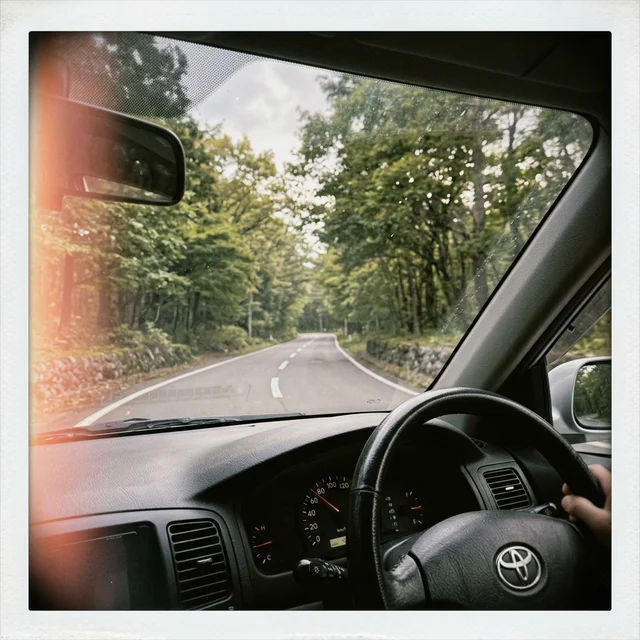
The biggest adjustment for German drivers is driving on the left. Most people adapt within the first 30–60 minutes. Be especially careful at intersections and when turning — your instinct may take you to the wrong lane. Roundabouts in Japan go clockwise.
There is no Autobahn equivalent in Japan. The maximum speed on expressways is 100–120 km/h on select new sections. Speed cameras are common. The alcohol limit is also significantly stricter than in Germany — at 0.03%, even a single beer puts most people over the limit. Do not drink if you plan to drive.
Renting a Car in Japan
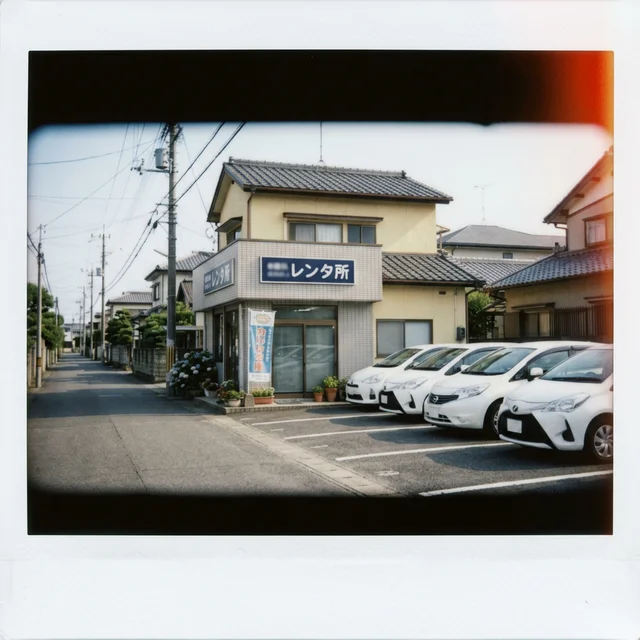
Present your German Führerschein along with JAF's paper original of the official translation at the rental counter. Staff will photograph both documents. Major rental companies — Toyota Rent a Car, Nippon Rent-A-Car, Times Car Rental, Orix — all accept this combination.
Most rental cars in Japan are automatic transmission, which is different from the manual-heavy market in Germany. Compact cars (like the Toyota Yaris or Honda Fit) are the most practical for Japan's narrow city streets. If you plan to explore rural areas or Hokkaido in winter, consider an SUV with studless tires.
Car Rental Insurance in Japan
Understanding insurance before you drive is important:
- CDW (Collision Damage Waiver) is usually included in the base rental price. It limits your liability in case of an accident.
- NOC (Non-Operation Charge) — If the car is damaged and cannot be rented while being repaired, you may be charged ¥20,000–¥50,000. You can purchase supplemental insurance to cover this.
- Personal accident insurance (PAI) can be added for approximately ¥500–¥1,000 per day.
- Check if your German or European credit card includes rental car insurance — cards like the American Express Gold or some Visa Infinite cards offer this benefit.
Useful Phrases at the Rental Counter
Most rental counter staff in Japan have limited English. These phrases will help:
- "I have a official translation." → JAFの翻訳があります。(JAF no hon'yaku ga arimasu.)
- "Please include an ETC card." → ETCカードをお願いします。(ETC ka-do wo onegai shimasu.)
- "Do you have English GPS?" → 英語のカーナビはありますか?(Eigo no ka-nabi wa arimasu ka?)
- "Full insurance, please." → フル補償でお願いします。(Furu hoshou de onegai shimasu.)
Best Road Trips for German Drivers in Japan
Japan rewards drivers with some of the world's most scenic roads. Here are routes that German visitors particularly enjoy:
- Hokkaido Scenic Byway — Furano & Biei — Open fields, lavender farms, and rolling hills reminiscent of Bavaria. Drive between Asahikawa and Furano in summer (July–August) for the best scenery. The roads are wide and well-maintained — ideal for anyone missing Germany's rural Landstraße.
- Nikko and Nasu Highlands, Tochigi — Forested mountain roads about 2 hours north of Tokyo. Historic shrines, waterfalls, and alpine scenery. A perfect weekend drive from the capital.
- Aso Caldera, Kyushu — One of the world's largest volcanic calderas. The road across the caldera rim offers landscapes unlike anywhere else in Asia. From Fukuoka, it's about 2.5 hours by expressway.
- Shimanami Kaidō — Onomichi to Imabari — A series of bridges linking the islands of the Seto Inland Sea. One of Japan's most iconic scenic drives. About 60 km across, with breathtaking ocean views at every turn.
- Oirase Gorge, Aomori (autumn) — A narrow river gorge road in Tohoku, stunning in October when the maples turn. Best visited early morning to avoid crowds.
Highway Tolls in Japan
Unlike Germany's Lkw-Maut (which only applies to trucks), Japan charges tolls for all vehicles on expressways. Costs are based on distance.
Example toll costs (approximate, one way):
| Route | Distance | Approximate Toll |
|---|---|---|
| Tokyo → Osaka | 550 km | ¥8,000–¥12,000 |
| Tokyo → Mt. Fuji area | 100 km | ¥2,000–¥3,000 |
| Sapporo → Furano | 100 km | ¥2,000–¥3,000 |
| Fukuoka → Nagasaki | 150 km | ¥2,500–¥6,000 |
Most rental cars in Japan include an ETC card reader. Ask your rental company to activate an ETC card — it allows automatic, cashless toll payment and sometimes offers off-peak discounts. Google Maps can calculate toll costs when planning your route.
Frequently Asked Questions
Q: My German IDP says it's valid worldwide. Why can't I use it in Japan?
A: Japan specifically requires IDPs based on the 1949 Geneva Convention. Germany issues IDPs under the 1968 Vienna Convention, which Japan does not recognize for driving. The official translation is the correct document for German drivers.
Q: My German license doesn't have an expiry date. Is that a problem?
A: No. German licenses issued since 2013 are valid for 15 years and the expiry date may appear only on the back. A German license without a visible expiry date is considered valid for use with a official translation in Japan.
Q: I'm German but my license was issued in another EU country. What do I need?
A: What matters is the country that issued your license, not your nationality. If your license was issued in Germany, you need a official translation. If it was issued in France or another country, check that country's specific requirements.
Q: Can I drive in Japan with an Austrian license?
A: Austria is not on Japan's list of six countries requiring official translations. Austrian drivers can use a standard International Driving Permit (IDP). Contact the ÖAMTC in Austria to obtain one before your trip.
Q: What if my rental car breaks down?
A: Call JAF roadside assistance at 0570-00-8139. Your rental company will also provide a 24-hour emergency number — keep it saved in your phone before you start driving.
Q: Do I need to understand Japanese road signs?
A: Most expressway signs include English. City street signs are primarily in Japanese. Use Google Maps for navigation — it works reliably throughout Japan and displays directions in English.
Q: Is it safe to drive in Japan as a foreigner?
A: Japan consistently ranks among the safest countries in the world for driving. Roads are well-maintained, traffic rules are strictly followed, and driver behavior is polite and predictable. The main adjustments are driving on the left and navigating narrow rural roads.
Ready to drive in Japan?
Apply for your German license translation: a PDF by email in 3–4 weeks to book your car, and the paper original delivered in Japan for €10.
Apply Now — €99 →